A Tradition of Quality That Still Holds Strong
In a globalized textile market, where raw materials and finished goods often cross multiple continents before reaching consumers, Made in the USA still means something powerful—especially in the world of yarn hosiery manufacturing. For decades, American mills have set the benchmark for durable, high-performance yarns and socks made from rag wool blends, fine merino, and resilient synthetics.
The Brickle Group’s own textile divisions represent a tradition of craftsmanship that hasn’t faded with time. Supporting the production of heritage-inspired wool work socks to modern technical hosiery for outdoor performance, USA yarn manufacturing continues to blend old-world know-how with modern innovation.
Why Domestic Yarn Manufacturing Matters
At its core, yarn hosiery manufacturing is an intricate balance of fiber science, machine precision, and human experience. When that process takes place in the United States, every stage—fiber selection, carding, spinning, plying, and knitting—is tightly controlled for consistency and traceability.
Here’s why that matters:
- Quality Control from Start to Finish
Domestic mills operate with shorter supply chains, meaning every batch of yarn can be inspected, tested, and fine-tuned to meet rigorous specifications. Whether it’s maintaining the loft and warmth of rag wool or ensuring colorfastness in blended yarns, quality assurance is a hands-on process in American manufacturing. - Reliability and Responsiveness
When you’re producing yarn for hosiery brands or industrial applications, lead time and consistency are everything. U.S. manufacturers can react faster to changes in demand, replenish orders quickly, and maintain consistent fiber blends—an advantage that offshore production rarely matches. - Support for American Jobs and Skills
Every cone of yarn spun domestically represents more than a product—it sustains skilled jobs in carding, spinning, knitting, and finishing. It preserves a deep legacy of craftsmanship that has defined the American textile industry for over a century.
Rag Wool and Beyond: The American Hosiery Heritage
Rag wool yarn holds a special place in the history of U.S. hosiery manufacturing. Traditionally made by blending new wool fibers with reclaimed or recycled materials, rag wool offered warmth, texture, and durability—qualities that made it the go-to yarn for outdoor, military, and work socks.
Today, many U.S. mills still honor that tradition while updating it for modern expectations. Recycled fiber programs, low-impact dyes, and sustainable spinning operations keep the “rag wool spirit” alive—where rugged performance meets environmental responsibility.
This balance of heritage and innovation defines the next generation of American hosiery yarns. Whether it’s a high-twist wool-nylon blend for hiking socks, a fine merino core-spun yarn for lifestyle wear, or an acrylic-wool composite designed for easy care, American mills remain at the forefront of engineered yarn development.
Sustainability Through Proximity
Domestic manufacturing isn’t just about national pride—it’s also a sustainability advantage. Producing yarn and hosiery in the United States reduces the carbon footprint associated with transoceanic shipping and overseas supply chains.
By manufacturing closer to where products are consumed, U.S. textile producers minimize transportation emissions and improve transparency for environmentally conscious brands and consumers alike.
Innovation Within Tradition
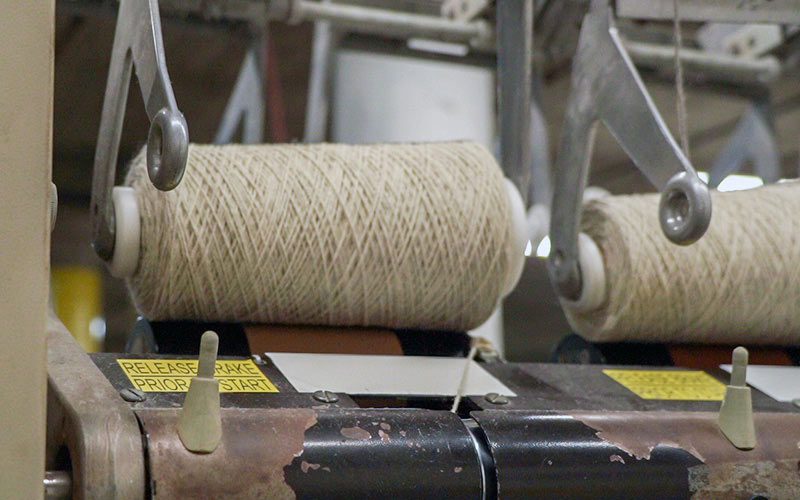
While the machinery inside a hosiery mill may look familiar—rows of spinning frames, twisting heads, and knitting stations—the technology driving them has evolved dramatically. American yarn manufacturers are investing in:
- Advanced blending systems for uniform fiber distribution
- Computer-controlled spinning equipment for precision yarn count control
- Moisture-wicking and antimicrobial fiber integration for performance wear
- Color-matching and dye optimization technology for consistency across product runs
This intersection of tradition and technology ensures that American-made yarns deliver both the warmth and authenticity of classic wool hosiery and the performance demanded by modern consumers.
The Brickle Group and the American Textile Legacy
For more than 85 years, The Brickle Group has been part of this enduring story. With operations spanning Bouckaert Industrial Textiles, Northwest Woolen Mills, and The Brickle Group’s own vertically integrated facilities which now include Family yarns and F&M Dye Corp., the company represents one of the few remaining end-to-end textile manufacturers in the United States.
From raw fiber to finished goods, The Brickle Group exemplifies what it means to maintain domestic control over production quality, innovation, and sustainability. Its work supports a resilient U.S. supply chain that keeps the art of yarn and hosiery manufacturing alive—strong, adaptable, and ready for the next generation.
Why the Future Still Belongs to American-Made Yarn
As consumers grow more aware of where their textiles come from, Made in the USA is no longer just a label—it’s a promise of integrity, performance, and sustainability. In hosiery and yarn manufacturing, that promise carries the weight of decades of innovation, craftsmanship, and community.
American-made yarns continue to define what premium quality means in the global marketplace: durability you can feel, consistency you can rely on, and a legacy you can trace back to the very fibers themselves.